If you are searching for jobs with visa sponsorship, you’ve probably already discovered that finding an overseas job is only the first step. The difficult part is identifying genuine employers, checking whether the specific role qualifies, and understanding what sponsorship actually means. In this guide, we’ll explain how UK visa sponsorship works, where to find genuine vacancies, how to check eligibility, and how to apply safely in 2026.
👉 Join a WhatsApp channel that posts ONLY UK visa sponsorship jobs: WhatsApp Channel
Key Takeaways
Visa sponsorship jobs are positions where an eligible employer may support a foreign worker’s application for an applicable work visa, subject to immigration rules.
Healthcare, IT, engineering, construction, finance, education, hospitality, logistics, and skilled trades can contain sponsorship opportunities, depending on current UK immigration rules.
Employer sponsorship does not guarantee visa approval because the applicant must independently meet the requirements of the relevant immigration route.
Genuine vacancies should identify the employer, job title, location, salary, requirements, and relevant sponsorship information where applicable.
Sponsor verification should be completed using the official UK register before you rely on an employer’s sponsorship claim.
Salary and occupation eligibility are important because a job offer alone does not automatically make someone eligible for a Skilled Worker visa.
Regular vacancy checks are valuable because sponsorship availability, eligible occupations, salary rules, and employer requirements can change.
What Are Jobs With Visa Sponsorship?
Jobs with visa sponsorship are positions where an eligible employer supports a foreign worker’s application for an applicable work visa, subject to the immigration rules of the destination country. In the UK, sponsorship generally involves an employer that holds an appropriate sponsor licence and offers an eligible role to a worker who meets the relevant immigration requirements.
Moreover, employer sponsorship and visa approval are different things. For example, a UK company may be licensed to sponsor Skilled Workers, but you must still satisfy the applicable occupation, salary, English-language, and other visa requirements.
Furthermore, the UK Skilled Worker route requires an eligible job, an approved UK employer, and the applicable minimum salary. The usual minimum salary is currently £41,700 per year or the going rate for the occupation, whichever is higher, although exceptions and different rules can apply. — Source: GOV.UK, 2026.
How Does Employer Visa Sponsorship Work?
Employer visa sponsorship is the process through which an approved employer supports an eligible overseas worker under an applicable immigration route. For example, an employer sponsoring a Skilled Worker must hold a valid sponsor licence and sponsor the worker in an eligible occupation.
In addition, a Certificate of Sponsorship (CoS) is an electronic record containing information about the sponsored worker and the job. For Health and Care Worker applicants, GOV.UK confirms that the worker needs a confirmed job offer and a certificate of sponsorship from an approved employer.
Why Are Jobs With Visa Sponsorship Important for International Job Seekers?
Jobs with visa sponsorship matter because they can connect eligible overseas workers with employers that are authorised to sponsor workers under specific immigration routes. Without an appropriate work permission route, accepting a UK job does not by itself give an overseas applicant the right to work.
First, sponsorship can simplify the employment-to-immigration pathway because the employer and worker complete different parts of the process. For example, the employer handles sponsorship responsibilities while the worker submits the appropriate visa application and supporting evidence.
At the same time, sponsorship is not a guarantee of immigration approval. Your occupation, salary, qualifications, English ability, documents, and personal circumstances may all affect the visa decision.
Moreover, the UK Health and Care Worker route can cover eligible healthcare and adult social-care occupations, but applicants must meet the route’s requirements and work for an approved employer. — Source: GOV.UK, 2026.
Visa sponsorship opportunities can exist across multiple occupations, but eligibility depends on the occupation code, employer, salary, and immigration route. A job title alone does not establish whether a vacancy qualifies for sponsorship.
For example, current UK immigration information includes eligible occupations connected with healthcare, science, pharmaceutical technology, construction trades, design, and social care under specific conditions. — Source: GOV.UK, 2026.
Healthcare jobs with visa sponsorship can include eligible medical, nursing, health-professional, and certain social-care occupations. For example, the Health and Care Worker route covers eligible jobs with the NHS, NHS suppliers, and adult social-care employers when the relevant requirements are met.
Importantly, overseas applicants should not assume that every care vacancy offers sponsorship. GOV.UK guidance states that employers can no longer sponsor new care workers or senior care workers from overseas under the changes introduced in July 2025, making careful verification especially important. — Source: GOV.UK, 2025.
IT jobs with visa sponsorship can be available when the role, occupation code, salary, and employer satisfy the relevant Skilled Worker requirements. For example, an international technology professional should check the actual occupation code rather than relying only on a title such as “Software Developer.”
In addition, the same principle applies to engineering, finance, data, construction, and other professional roles. The occupation code is often more important than the marketing title used in a job advertisement.
Countries including the UK, United States, Canada, Australia, and New Zealand operate immigration routes that can allow eligible foreign workers to work under specific employer or skilled-worker programmes. However, each country has its own occupation, salary, employer, language, and visa requirements.
For example, this guide focuses primarily on the UK because the UK uses formal sponsor licensing for several work routes, including the Skilled Worker route. GOV.UK provides dedicated information covering Skilled Worker, Health and Care Worker, and other work visas. — Source: GOV.UK, 2026.
Therefore, international applicants should choose the country and immigration route before applying widely. A vacancy that provides sponsorship in one country does not automatically qualify for a similar visa in another country.
How Can I Find Genuine Jobs With Visa Sponsorship?
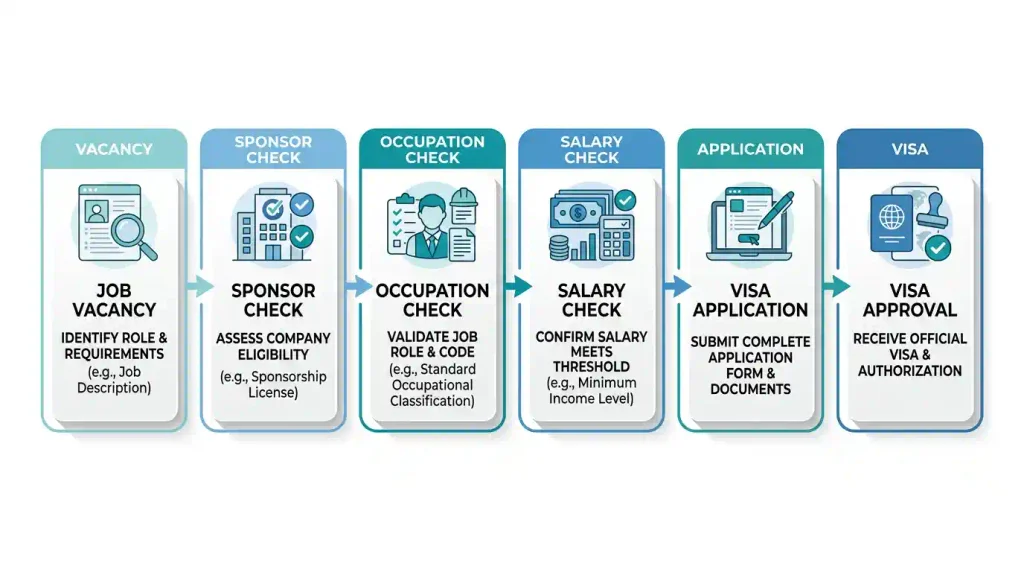
Finding a visa sponsorship job involves identifying an eligible vacancy, checking the employer’s sponsorship status, confirming that the occupation and applicant meet the relevant requirements, and completing the applicable employment and visa application process.
First, search through employer career pages, reputable job platforms, official immigration resources, and specialist vacancy hubs. For example, searching for “UK Skilled Worker visa jobs” together with a specific profession can produce more targeted results than searching for “jobs abroad.”
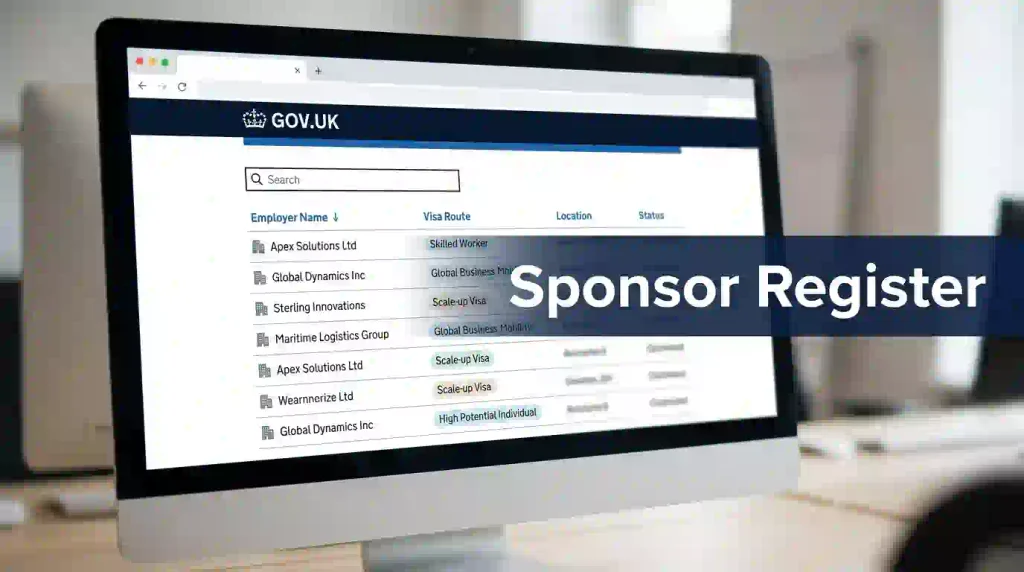
Second, check the employer before spending significant time on an application. The UK government publishes a Register of Worker and Temporary Worker licensed sponsors, which can be used to check whether an organisation holds a relevant sponsor licence. The register was updated on 2 October 2026. — Source: GOV.UK, 2026.
How Can I Check Whether an Employer Can Sponsor My Visa?
You can check whether a UK employer holds a sponsor licence by searching the official Register of Worker and Temporary Worker licensed sponsors. The register identifies organisations, locations, sponsor ratings, and relevant routes.
Next, remember that having a sponsor licence does not mean every vacancy from that employer is sponsored. For example, a company may hold a Skilled Worker licence but advertise some positions that are not eligible for sponsorship.
Then check five important details:
Employer name — Does it match the official sponsor register?
Sponsor route — Does the employer hold the relevant route licence?
Occupation — Is the actual role eligible?
Salary — Does the advertised salary satisfy the applicable threshold?
Vacancy wording — Does the employer clearly confirm sponsorship or willingness to consider it?
What Qualifications Do I Need for a Visa Sponsorship Job?
Visa sponsorship job eligibility depends on the specific occupation, immigration route, employer, salary, and applicant requirements. Qualifications may be essential for regulated professions but less important for some other occupations.
For example, doctors, nurses, pharmacists, and certain other healthcare professionals may require professional registration or evidence of qualifications before they can practise. By contrast, some technical occupations may focus more heavily on relevant skills, experience, occupation eligibility, and salary.
Furthermore, applicants should check English-language requirements where applicable. UK sponsor guidance states that people making their first Skilled Worker application on or after 8 January 2026 generally need English-language competence at B2 level under the Common European Framework of Reference for Languages, subject to the applicable rules and exceptions. — Source: GOV.UK, 2026.
Can I Get a Job With Visa Sponsorship Without Experience?
You may find some entry-level or training-related opportunities, but having no experience can significantly reduce the number of sponsorship vacancies available to you. Employers generally sponsor workers to fill genuine eligible roles, so applicants should demonstrate skills that match the vacancy.
For example, a recent graduate with a relevant degree may target eligible graduate-level occupations, while a person without qualifications may have fewer options in routes requiring skilled occupations.
At the same time, never pay an individual simply because they promise a guaranteed sponsored job. Genuine recruitment should involve a real employer, genuine vacancy, employment terms, and a lawful immigration process.
Applying for a visa sponsorship job requires you to match your skills to an eligible vacancy before you submit the application. A targeted application is usually more effective than sending the same CV to hundreds of unrelated employers.
First, follow this process:
Choose your target country and occupation.
Search for current sponsorship vacancies.
Check the occupation and salary requirements.
Verify the employer’s sponsor status.
Tailor your CV to the vacancy.
Submit the application through a legitimate channel.
Prepare for interviews and technical assessments.
Confirm sponsorship details before accepting an offer.
Obtain the required sponsorship documentation.
Submit the relevant visa application using official guidance.
Moreover, the Health and Care Worker visa process requires a confirmed job offer and Certificate of Sponsorship before the visa application, and applicants can apply up to 3 months before their stated start date. — Source: GOV.UK, 2026.
Does Visa Sponsorship Guarantee Work Visa Approval?
Visa sponsorship does not guarantee work visa approval because the applicant must still meet the requirements of the relevant immigration route. Sponsorship demonstrates that an employer is supporting the employment-related immigration process; it does not replace the government’s eligibility assessment.
For example, a sponsored worker may still need to satisfy salary, English-language, identity, documentation, suitability, and other requirements depending on the route.
Therefore, treat phrases such as “100% visa guaranteed” as a major warning sign. Legitimate employers can offer employment and sponsorship where permitted, but immigration authorities make the final decision.
How Can I Avoid Fake Visa Sponsorship Jobs and Recruitment Scams?
A genuine visa sponsorship vacancy should provide identifiable employer and job information and should be checked against relevant official immigration or employer-sponsorship information before an applicant accepts an offer or pays any fees.
First, watch for warning signs such as:
Guaranteed visa promises
Requests for large upfront recruitment payments
No identifiable employer
No proper job description
Unusually high salaries for simple work
Pressure to transfer money quickly
Requests for sensitive documents through unofficial channels
Claims that sponsorship is available without checking eligibility
Moreover, the UK government specifically provides guidance for overseas health and social-care applicants on recruitment processes, finances, employment offers, visas, regulation, and avoiding scams. — Source: GOV.UK, 2025.
A genuine employer should be verifiable. A genuine vacancy should be specific. A genuine visa process should be based on official immigration rules.
What Is a Certificate of Sponsorship and When Is It Required?
A Certificate of Sponsorship is an electronic record assigned by an approved UK sponsor to support a worker’s relevant visa application. It contains information about the worker and the sponsored job and is an important part of applicable sponsored-work routes.
For example, a healthcare professional receiving an eligible UK job offer may need a Certificate of Sponsorship before submitting the relevant Health and Care Worker visa application.
What Tools and Resources Can Help You Find Visa Sponsorship Jobs?
The most reliable visa sponsorship job search combines vacancy platforms with official immigration and sponsor-verification resources. Using more than one source helps you identify opportunities while independently checking whether the employer and role are suitable.
Resource
Best use
What to verify
GOV.UK Work Visas
Immigration rules
Current visa requirements
UK Sponsor Register
Employer verification
Licence and route
Employer Career Pages
Current vacancies
Sponsorship wording
Specialist Job Hubs
Vacancy discovery
Employer and job details
Professional Registration Bodies
Regulated careers
Registration requirements
Recruitment Platforms
Wider job search
Sponsorship confirmation
Additionally, free resources such as GOV.UK, employer career websites, professional registration bodies, and major job platforms can be used alongside specialist job-search websites. The goal is not to trust one website blindly but to verify important information independently.
What Should You Do Next to Find a Visa Sponsorship Job?
The best next step is to build a focused sponsorship-job search around your occupation, target country, and eligibility. A focused approach helps you avoid wasting applications on jobs that cannot support your immigration route.
First, use this checklist:
Select an occupation that matches your qualifications and experience.
Choose the UK route that may apply to your circumstances.
Search current vacancies using specific job titles.
Check the sponsor register before relying on employer claims.
Compare the salary with current immigration requirements.
Prepare a targeted CV for each relevant position.
Apply through legitimate employer or recruitment channels.
Verify sponsorship before paying money or accepting an offer.
Monitor new vacancies regularly because opportunities change.
Jobs with visa sponsorship can provide a legitimate pathway for eligible international workers to pursue employment in the UK, but sponsorship must always be matched with current immigration requirements. The availability of sponsorship varies by country, occupation, employer, salary level, immigration route, and the rules in force when the application is made.
Ultimately, the safest strategy is to verify the employer, occupation, salary, sponsorship status, and visa requirements before applying or paying any fees. Start with a suitable occupation, target genuine employers, keep your CV current, and monitor newly published opportunities.
Finally, use official immigration information whenever rules affect your eligibility. A well-researched application can help you focus on genuine opportunities instead of wasting time on unsuitable or misleading vacancies.
Written byDr. Yankee — SEO content creator and publisher focused on international job opportunities, UK visa sponsorship vacancies, and practical job-search information.
Reviewed byHuman Editorial Review Team — Immigration and employment information should be checked against current official UK government guidance before publication and application.
Disclaimer: This article was initially drafted using AI assistance. However, the content has undergone thorough revisions, editing, and fact-checking by human editors and subject matter experts to ensure accuracy. Immigration rules and sponsorship requirements can change, so readers should verify current requirements on official government sources before making immigration or employment decisions.